
Adventure Honeymoon Ideas: You have paid for a wedding. You have survived the seating chart wars. Now you get to choose a trip that actually feels like you not the generic overwater bungalow your cousin keeps posting.
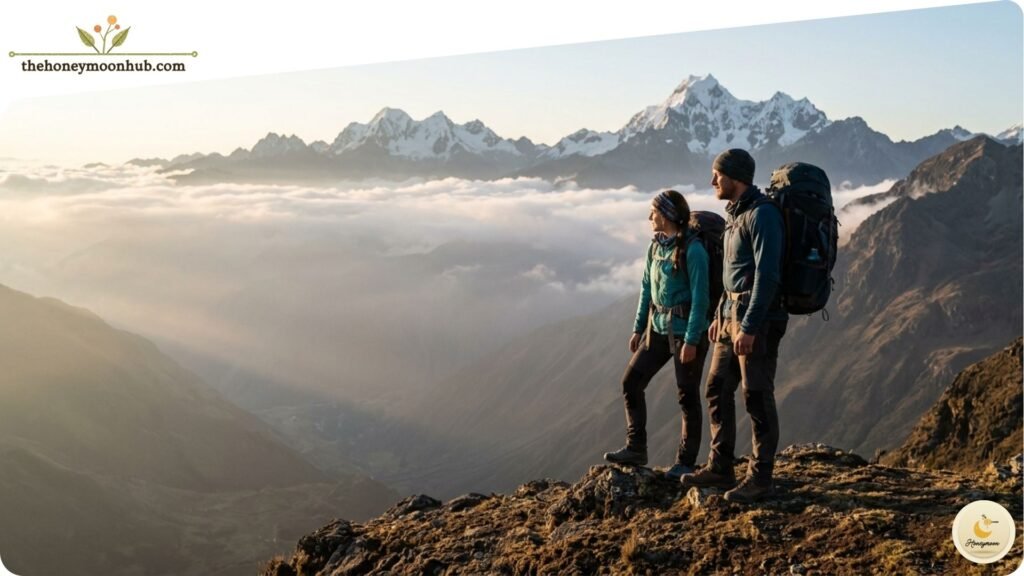
Here is what most honeymoon content will not tell you: the best adventure honeymoon ideas for 2026 involve trade-offs. You cannot have five-star linens at 4,000 meters in a remote corner of the Peruvian Andes. You can, however, have a night sky that makes you forget you have not showered in two days. While many are sticking to the classics, those looking to build a truly elite 2026 honeymoon itinerary are shifting toward “earned memories” over passive relaxation.
This is not a roundup of zip-lining add-ons to otherwise tame resort stays. These are full-send, terrain-first destinations for couples who want to earn their views and wake up with sore quads.
Why Active Couples Are Rethinking Traditional Honeymoons in 2026
The shift is simple: more couples realized they hate sitting still. Data from adventure travel operators shows a 40 percent increase in multi-sport honeymoon bookings compared to pre-2023 levels. The why matters.
Traditional honeymoons often create passive memories—you watched a sunset, you ate a meal, you floated in a pool. Adventure honeymoons create earned memories. You navigated a crevasse together. You decided to push for the next ridgeline when both of you were exhausted. That kind of shared friction builds a different story than synchronized swimming with cocktails.
Couples booking for 2026 specifically are avoiding peak crowds by targeting shoulder seasons and lesser-known trekking corridors. The “Instagram honeymoon” is dying. The “nobody we know has done this” honeymoon is very much alive.
Best Time of Year for Adventure Honeymoons (Real Seasonal Logic)
Forget the generic “spring and fall” advice. Here is the actual breakdown by what you want to feel.
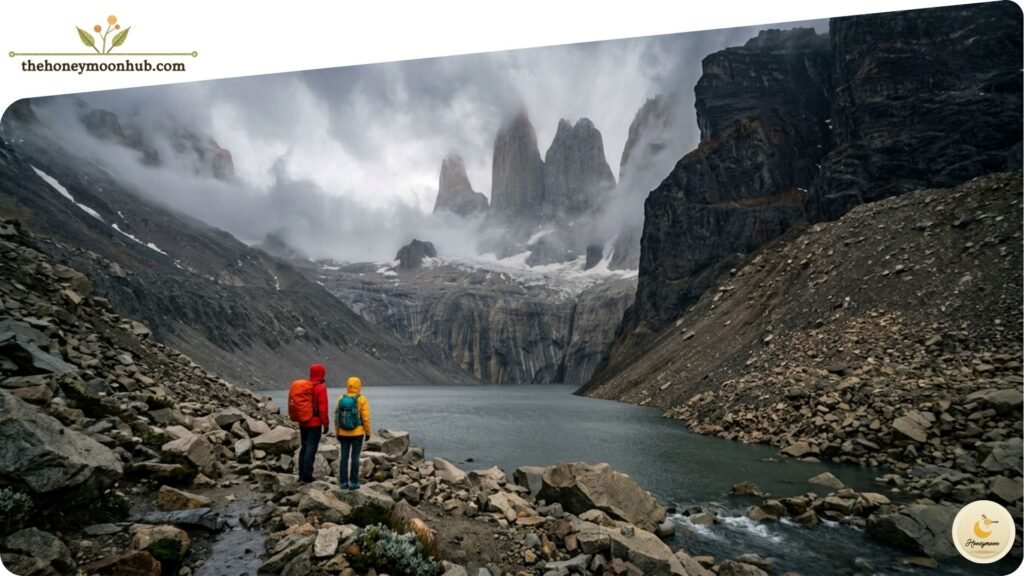
Patagonia (Chile/Argentina): December to February gives you 16 hours of daylight and tolerable wind (25–40 kph instead of 80+). November and March are quieter but you will risk trail closures in Torres del Paine. I hiked the Mirador Las Torres in late March and stood in sleet for 20 minutes waiting for the towers to clear. Worth it? Yes. But pack warmer than you think.
Because these hubs are small, checking current Puerto Natales hotel availability for 2026 should be your first logistical move.
New Zealand South Island: February and March are the sweet spot. January is packed with Australian holidaymakers. April temperatures drop but the crowds vanish from routes like the Routeburn Track. The real insider move: book hut systems the day they open (June for the following season). They sell out in four hours.
Costa Rica (rainforest focus): May to November is cheaper and greener, but you will wade through mud to your knees on the Osa Peninsula. December to April is dry and crowded. 2026 prediction: more couples choosing wet season for lower costs and empty trails, accepting daily afternoon downpours as part of the experience.
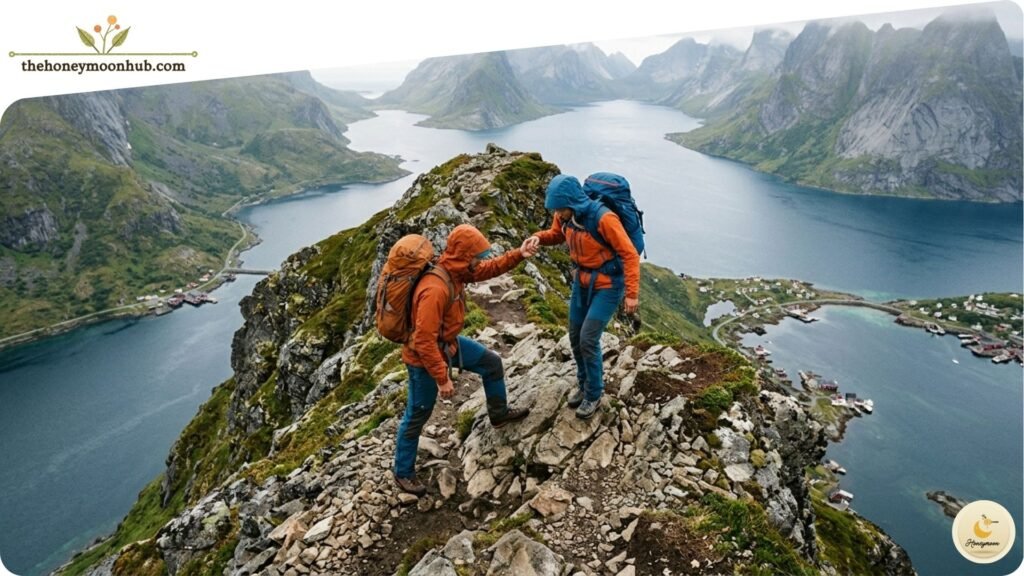
Norway (fjords and ridges): Late June to early August is your only realistic window for high-altitude routes like Besseggen Ridge. September offers Northern Lights potential but some mountain huts close by mid-month. Check specific hut closing dates before booking flights.
How to Get There: Tactical Route Planning for Remote Hiking Honeymoons
The biggest mistake adventure honeymooners make is underestimating transit days. Here is what works.
For Patagonia: Fly into Punta Arenas (PUQ) via Santiago. Do not book the first bus to Puerto Natales the same day—flight delays into PUQ happen constantly. Spend one night in Punta Arenas, eat king crab at La Luna, then take the three-hour bus to Puerto Natales the next morning. From there, you are two hours from Torres del Paine park entrance.
For New Zealand: Queenstown (ZQN) is your hub for most South Island adventure routes. Fly via Auckland or Christchurch. If you are hiking the Routeburn or Kepler Tracks, book transport through TrackNet—they coordinate luggage transfers and know which car parks fill by 8 a.m.
For Dolomites (Italy): Fly into Venice (VCE) or Innsbruck (INN). Venice is cheaper but adds a two-hour bus to Cortina d’Ampezzo. The real local secret: rent a car from the Venice airport, not the city center. You will save three hours of navigating water buses with backpacks.
Adventure Honeymoon Ideas: Seven Destination Deep Dives
Chilean Patagonia: The O Circuit vs. W Trek Decision (Adventure Honeymoon Ideas)
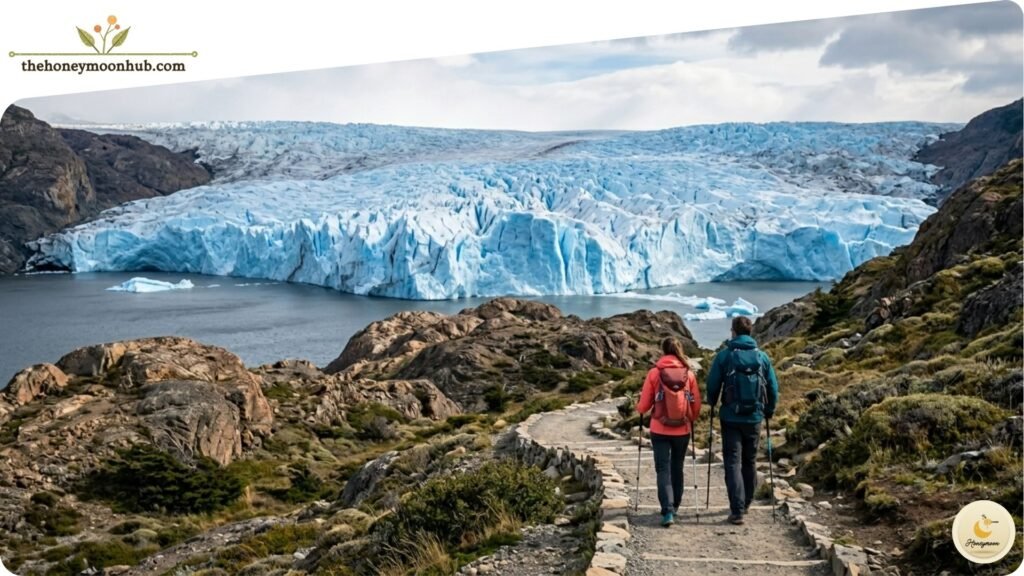
This is the most common debate among adventure-seeking couples. The W Trek takes four to five days and covers the greatest hits—Las Torres, French Valley, Grey Glacier. You will share campsites with 50+ other hikers in peak season.
The O Circuit takes seven to eight days, adds the remote back side of Paine massif, and cuts crowd contact by 80 percent. I counted twenty-three total hikers on the John Gardner Pass day. The trade-off is you carry more food and the wind on the back side nearly knocked me flat twice.
For honeymooners: Do the O Circuit if both of you have backpacking experience. Do the W Trek if one of you is newer to multi-day carries. Book campsites through Vertice and Las Torres—they use different reservation systems and the coordination is annoying but mandatory.
New Zealand South Island: Routeburn Track Hut System
Unlike tent camping, the Routeburn uses shared huts with bunk beds, running water, and gas cookers. This is adventure without tent weight. The full track runs 32 kilometers between the Divide and Routeburn Shelter, typically done in two to three nights.
The honeymoon-specific move: book a private room at Routeburn Falls Hut. It costs more but you get a door that closes and two twin bunks pushed together. After spending the day climbing to Harris Saddle, that privacy matters more than any luxury hotel amenity.
Transport logistics matter: you start at one end and end at another. Use TrackNet’s shuttle service and tip the driver to hold your overnight bag at the destination lodge.
Norwegian Fjords: Besseggen Ridge Day Hike
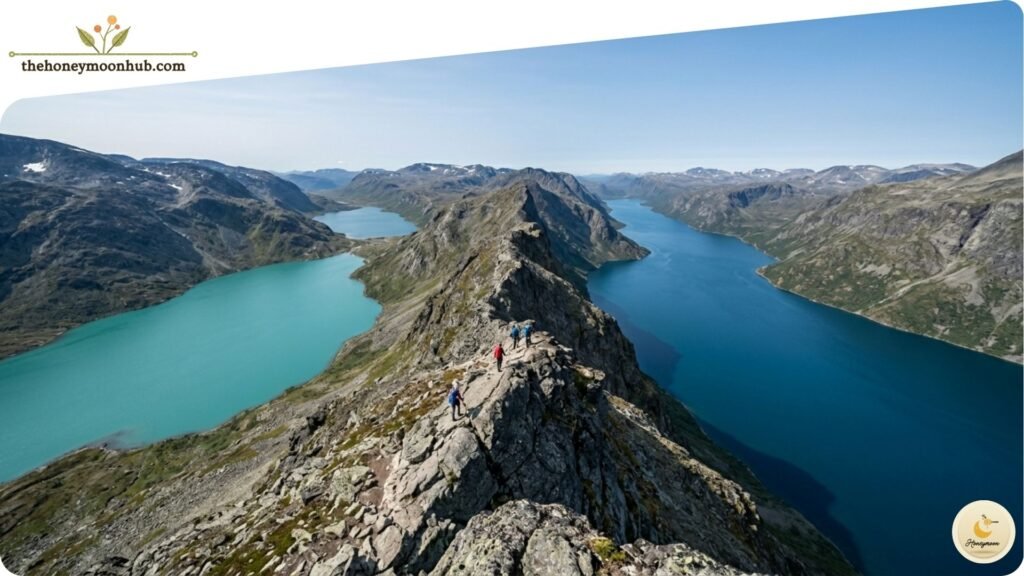
This is not a multi-day trek. It is a brutal, spectacular eight-hour ridge traverse that separates two turquoise lakes—Gjende and Bessvatnet—by a knife-edge spine of rock. The standard route starts at Gjendesheim, takes the boat to Memurubu, and hikes back to Gjendesheim.
Go early. The first boat leaves at 7:30 a.m. and you want to be on it. By 10 a.m., the ridge bottlenecks with day hikers who did not bring proper boots. I watched someone in canvas sneakers slide ten feet down a gravel slope. Do not be that couple.
Stay the night before at Gjendesheim Turisthytte. The beds are basic, the dinner is family-style and excellent, and you wake up already at the trailhead.
Costa Rica Osa Peninsula: Corcovado National Park (Adventure Honeymoon Ideas)
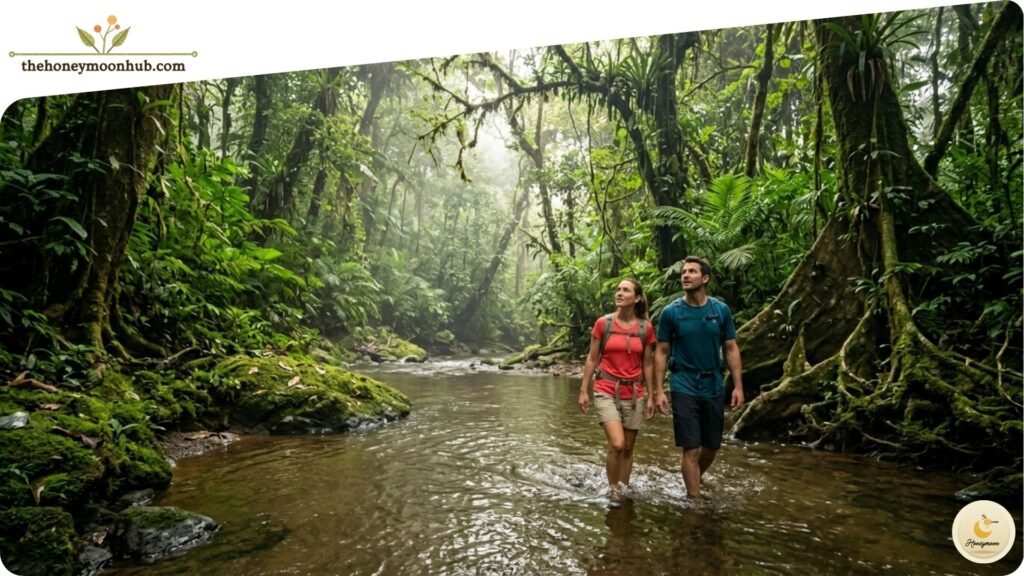
Skip Manuel Antonio. The crowds there are worse than a mall food court at noon. Corcovado requires advance permits (limited to 160 visitors daily) and a guide. The experience is muddy, humid, and genuinely wild. You will see tapirs, squirrel monkeys, and possibly a puma if you are lucky and quiet.
The honeymoon move: base at Luna Lodge on the edge of the park. You get an open-air yoga deck, a pool fed by spring water, and guided day hikes into Corcovado. Do not stay inside the park overnight unless you are prepared for bunk beds and bats in the sleeping area. I made that mistake. The bats were fine. The snoring was not.
Italian Dolomites: Via Ferrata Routes for Mixed-Ability Couples
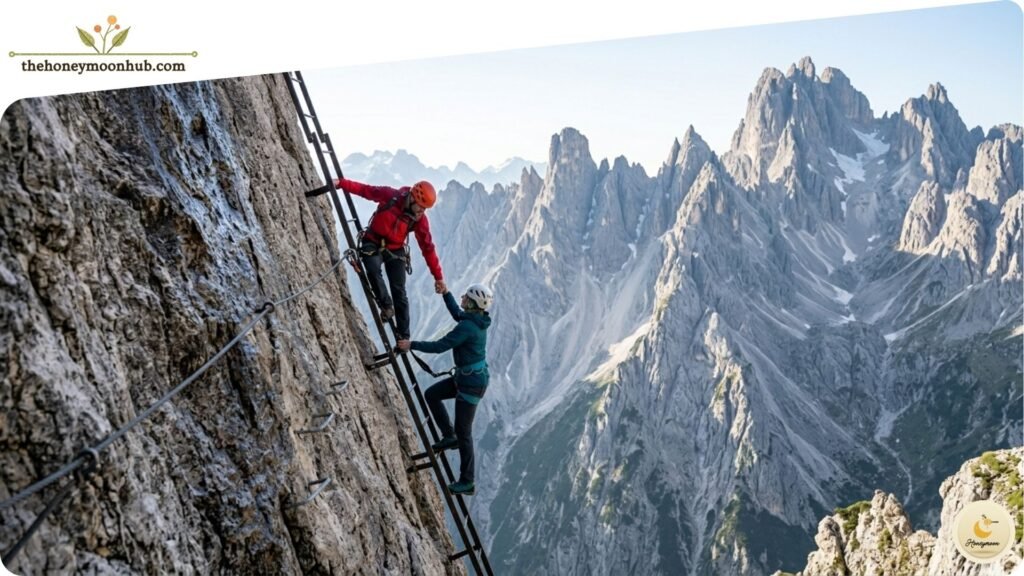
Via ferrata means “iron path”—cables and ladders bolted into rock faces that let you safely traverse exposed terrain without full technical climbing gear. This is perfect for couples where one person loves exposure and the other has some fear of heights. The cables provide security.
The Ivano Dibona route near Cortina d’Ampezzo is the best beginner-friendly via ferrata. It takes four to five hours, includes a tunnel through the mountain, and ends at Rifugio Col Gallina for polenta and red wine. Rent via ferrata kits (harness, two leashes, helmet) from Cortina’s outfitters—do not cheap out on used gear.
Canadian Rockies: Skyline Trail in Jasper (Adventure Honeymoon Ideas)
Jasper’s Skyline Trail runs 44 kilometers with 1,600 meters of elevation gain, mostly above treeline. The views of the Maligne Valley are continuous and distracting. Book remote campsites through Parks Canada’s reservation system—they open in late January for the following summer and disappear within ninety minutes. If the ruggedness of Jasper feels too remote, you can find more luxury mountain basecamps in the Rockies just a few hours south in Banff.
The specific honeymoon tip: camp the first night at Little Shovel, the second at Curator, and the third at Snowbowl. This splits the elevation gain evenly and puts your hardest day (Curator to Snowbowl) in the middle when legs are still fresh. Resupply in the town of Jasper at the grocery store, not the overpriced outdoor gear shops.
Peru: Salkantay Trek to Machu Picchu (Adventure Honeymoon Ideas)
The Inca Trail requires booking five months ahead and permits sell out instantly. The Salkantay Trek is less crowded, cheaper, and (for many) more visually stunning. You cross Salkantay Pass at 4,600 meters, then descend through cloud forest to Aguas Calientes.
Altitude is not a suggestion. Spend two full days in Cusco before starting—I mean do-nothing days, not “light walking” days. I saw a couple from sea-level Florida attempt the trek after one night in Cusco. The wife was vomiting by lunch on day one. They helicoptered out at $3,000. Because the Salkantay Pass sits at 4,600 meters, mastering high-altitude wellness and nausea prevention is the difference between a summit photo and a medical evacuation.
Use a local operator like Salkantay Trekking or Machu Picchu Reservations. Pay the extra $150 per person for the “luxury camping” option—real mattresses, dining tent, hot water bags in your sleeping bags at night.
Where to Stay: Area-Based Guidance for Each Destination
Patagonia (Puerto Natales): Stay at The Singular. Yes, it is expensive. But after the O Circuit, the renovated cold-storage warehouse with a massive thermostatic pool and whiskey bar is exactly what your body needs. For budget, Lili Patagonico has private rooms and a kitchen you can actually use.
New Zealand (Te Anau): Radfords on the Lake. It is not fancy, but the owners store extra luggage, dry wet gear, and make you scrambled eggs at 6 a.m. before your shuttle to the Routeburn trailhead.
Dolomites (Cortina): Hotel Olimpia. Three-star, family-run, twenty meters from the via ferrata equipment rental shop. The breakfast buffet includes fresh apple strudel. That matters at 7 a.m.
Costa Rica (Puerto Jiménez): Agua Dulce. Basic, clean, and the owner knows every Corcovado guide personally. Book through her, not a third-party site.
Best Experiences Prioritized (What Actually Delivers)
- O Circuit back side (Patagonia): The John Gardner Pass view of Grey Glacier from above. No photo prepares you.
- Routeburn Falls to Harris Saddle (New Zealand): Three hours of alpine traverse with the Darran Mountains to your left.
- Besseggen Ridge knife-edge (Norway): The ten-meter section where both sides drop vertically. You will move slowly and carefully.
- Salkantay Pass sunrise (Peru): Leave camp at 4:30 a.m. to hit the pass as light hits the peak.
- Corcovado morning wildlife (Costa Rica): 5:30 a.m. start. You will see everything or nothing. That is the point.
If these international routes feel too ambitious for your timeline, there are equally rugged North American wilderness escapes that offer the same sense of awe.
INSIDER TRAVEL TIPS (Adventure Honeymoon Ideas)
Book refundable campsites only. Patagonia weather cancelled my Grey Glacier paddleboarding at 6 a.m. with a wind gust that bent tent poles. Vertice refunded within 48 hours. Refugio Los Cuernos did not.
Pack separate from your partner on trekking days. One lost bag at a luggage storage facility in Puerto Natales derailed three days of a couple’s itinerary last season. Each of you carry one complete change of clothes and critical medications.
Use local SIM cards immediately upon arrival. Chilean Entel works in Torres del Paine’s campsites. New Zealand’s Spark has coverage at Routeburn Falls Hut. Do not rely on downloaded maps—trail reroutes happen.
Eat the big meal at lunch, not dinner. Mountain huts and refugios serve smaller dinners to save fuel. The lunch you pack from the grocery store should be your calorie-dense meal. Dinner is soup and bread.
Break in boots on similar terrain. Walking on pavement does not prepare you for the Dolomites’ scree fields. Find a gravel trail or uneven grass. Do fifty meters of side-hilling. Your ankles will thank you.
WHAT TOURISTS OFTEN REGRET Adventure Honeymoon Ideas
Overpacking and abandoning gear at hostels. Every adventure hub has a donation pile of almost-new hiking pants and water filters. People buy too much, pack too heavy, and leave it behind. Start with less. Buy what you actually need locally. To avoid leaving half your suitcase in a hostel donation bin, adopt a specialized adventure packing strategy that prioritizes technical layers over “just in case” outfits.
Scheduling zero rest days between major efforts. Going from the W Trek directly to a bus to El Calafate to Perito Moreno Glacier sounds efficient. You will be exhausted and snippy. Build in one completely unstructured day for every three active days.
Assuming all adventure activities run daily. The via ferrata guide in Cortina only runs the Ivano Dibona route on Tuesdays, Thursdays, and Saturdays. The Besseggen boat operates on a reduced schedule after August 20. Check specific 2026 calendars, not generic “season” information.
Ignoring foot care as a couple. Blisters cause more trip derailments than altitude or weather combined. Bring leukotape. Learn to apply it before hotspots form. Check each other’s feet every evening.
Booking non-refundable flights before confirming trail permits. The Skyline Trail permits sell out in under two hours. The O Circuit campsites require booking four months ahead. Secure your on-trail logistics first, then buy plane tickets.
Budget Expectations (Realistic Ranges for 2026)
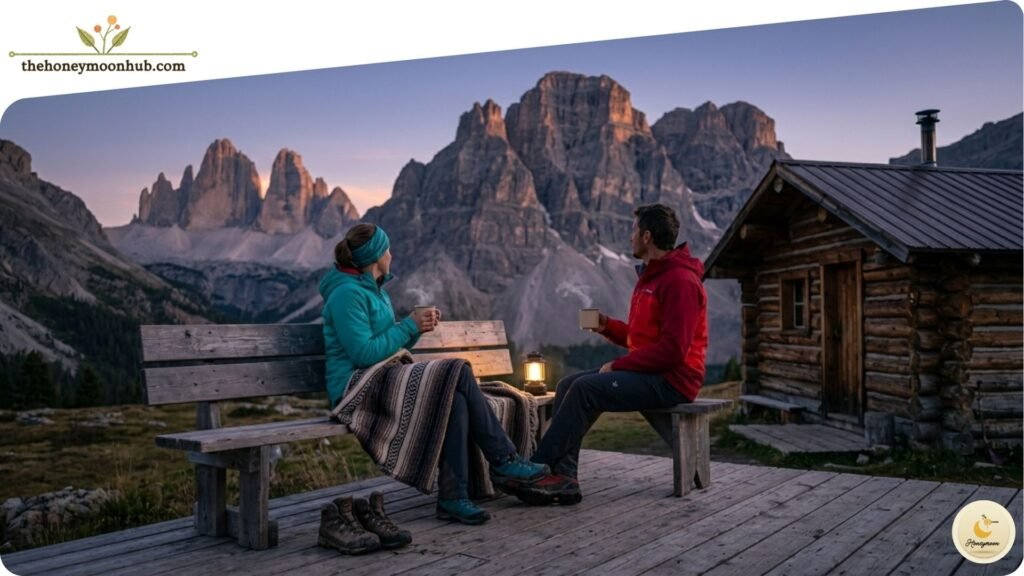
Budget adventure couple ($150–250 per day total): Tent camping, cooking own meals, local buses between trailheads, dorm-style huts where available. Works for Patagonia W Trek and New Zealand Great Walks.
Mid-range adventure couple ($350–550 per day total): Private rooms in refugios, guided day hikes for via ferrata, rental gear from local shops, restaurant dinners. Suitable for Dolomites and Corcovado.
High-end adventure couple ($700–1,200 per day total): Luxury camping on Salkantay, heli-hiking add-ons in New Zealand, private guides for entire trek duration, post-trek spas. Only necessary if your body recovery needs are specific or your timeline is compressed.
These are per-couple numbers including lodging, food, on-trail permits, local transport, and gear rental. They exclude international flights.
Suggested 12-Day Patagonia Itinerary (O Circuit Priority)
Day 1: Arrive Punta Arenas. Eat king crab. Sleep.
Day 2: Bus to Puerto Natales. Pick up rented tent, stove, sleeping bags. Buy food at Unimarc.
Day 3: Bus to Torres del Paine. Hike to Serón campsite (3 hours).
Days 4–9: O Circuit trek (7 nights, 8 days). Resupply not possible—carry all food.
Day 10: Finish at Paine Grande. Ferry across Lake Pehoé. Bus back to Puerto Natales.
Day 11: Rest day. Hot shower. Laundry. The Singular’s pool.
Day 12: Bus to Punta Arenas. Fly home or to Santiago.
This assumes strong fitness (comfortable with 8-hour hiking days and full pack weight of 12–14 kilograms). Stretch to 13 days if you want a buffer for weather.
FAQ Adventure Honeymoon Ideas
Can adventure honeymoons still feel romantic without sacrificing adrenaline?
Yes, but you have to define romance differently. If candlelit dinners are your baseline, stay home. Adventure romance happens in shared effort—pulling your partner up a via ferrata ladder, brewing coffee on a camp stove while fog clears a glacier, collapsing into hut bunks with matching exhaustion. The intimacy comes from problem-solving together, not from rose petals. Pick destinations with one “slow” evening per three active days—a hot spring, a lodge with good wine, a flat spot to lie down and name constellations.
What’s the best adventure honeymoon for couples with different fitness levels?
The Dolomites via ferrata system. You can choose routes by difficulty grade (K1 to K5). The Ivano Dibona is K2—manageable for most fit beginners. The bigger principle: structure rest days as couples days, not “one person rests while the other hikes.” Stay in Cortina, send the fitter partner on a longer via ferrata while the other does a valley walk to a rifugio for lunch, then meet in the afternoon. You are not training for an Olympic event. You are building a trip that works for two different bodies. Balancing two different sets of physical limits requires a collaborative trip planning framework to ensure neither partner feels left behind or burnt out
How many days should an adventure honeymoon be to feel worth the travel?
Fourteen days minimum for intercontinental travel. Here is the math: two days lost to flights and jet lag, two days of pre-trek logistics (gear rental, food shopping, permit pickup), six to eight days on trail, two buffer days for weather or injury, one true rest day. Anything shorter than twelve days and you spend the entire trip rushing from one transport connection to the next. Couples who book ten-day trips to Patagonia almost always leave wishing they had added four more days.