

Honeymoon in Italy Cost: Let me skip the dreamy prose. You want numbers.
After tracking Italy travel pricing across three peak seasons and talking to dozens of newlywed couples who just returned, here is the honest answer: A honeymoon in Italy cost for 2026 will land between €4,500 and €12,000 for ten days, depending entirely on where you go and how you move between cities.
That range is wide for a reason. A week parked in Sicily eating street food costs very different from a Venice-to-Amalfi sprint with private boat transfers.
For the couples who need a bottom line right now: Plan on €250–€400 per day for mid-range comfort (three-star hotels, train travel, one nice dinner), €500–€800 for premium (four-star, private tours, multiple course meals), or €150–€250 per day on a lean budget staying in agriturismos and eating lunch as your main meal.
That daily number includes lodging, food, local transport, activities, and incidentals. It does not include international flights.
Many couples save hundreds simply by comparing Rome honeymoon hotel prices before choosing neighborhoods like Monti or Trastevere.
Let me walk you through exactly where your money goes in 2026, because inflation has hit Italian tourism differently across regions.
Before locking your itinerary, use this detailed Italy honeymoon packing checklist to avoid expensive last-minute purchases in cities like Positano or Venice.
Why Italy Still Wins for Honeymoons (Despite the Price Tag) Honeymoon in Italy Cost
You already know the reasons. But let me tell you what actually matters after watching fifty couples navigate their first two weeks as spouses.
Italy delivers variety without long-haul flights from most of Europe. You get alpine lakes, renaissance cities, volcanic coastlines, and Mediterranean islands within a four-hour train ride of each other. No other European country packs that density of contrast.
The service culture understands honeymooners. Hoteliers upgrade without asking. Restaurants send complimentary prosecco. This isn’t random kindness—it’s a business strategy. Italians know word-of-mouth from happy newlyweds drives bookings for years.
What surprised me most? The cost difference between “doing Italy right” and “doing Italy expensively” is smaller than you think. A €30 pasta in tourist-heavy Florence tastes worse than a €14 plate three blocks away. The expensive mistake isn’t the budget—it’s poor research.
Best Time to Visit for Your Wallet and Sanity
April to May (€€): This is the sweet spot. Crowds exist but don’t crush you. The honeymoon in Italy cost during shoulder season runs about 20% below summer peak. Weather in the Lakes District hits 18–22°C. The catch? April brings rain in Rome and Naples. Pack a proper shell jacket, not an umbrella.
September to October (€€): Better weather than spring. Warmer water for Amalfi coast swimming. September is perfection but prices stay summer-high until the 15th. Wait until the last week of September and watch rates drop 30% overnight. The trade-off? Shorter daylight by October.
June to August (€€€€): Avoid unless you enjoy sweating through church visits and paying €350 for a room that goes for €140 in March. The real problem isn’t just money—it’s experience quality. The Sistine Chapel becomes a cattle chute. Positano’s main road turns into a standstill parking lot. I watched a couple wait 50 minutes for a €28 mediocre pizza in Burano last July. Don’t.
November to March (€): Cheap but complicated. Many coastal hotels close entirely from November to Easter. Venice floods (acqua alta). Sicily remains pleasant, but northern Italy is grim and rainy. Only recommended if your honeymoon vision includes empty museums and serious jacket weather.
Getting There Without Getting Gouged (Honeymoon in Italy Cost)

Flight pricing reality for 2026: Rome FCO and Milan MXP are your cheapest entry points. Budget carriers (Ryanair, easyJet, Wizz) now fly directly to both from US East Coast hubs seasonally. But read the fine print—your “€399” flight lands at 10 PM, and the train to your hotel stopped running at 9.
The smarter play: Fly into Milan or Rome on a flag carrier (Delta, American, United, ITA) mid-week. Tuesday and Wednesday departures save €150–€300 per ticket compared to Friday or Saturday. Book exactly 10–12 weeks out. Not earlier. Not later. I’ve tracked this across 14 months.
Alternative entry: Naples International (NAP) handles more direct flights than you’d think, especially from London and Paris hubs. If your honeymoon focuses on Amalfi or Capri, flying into Naples saves the €120 train ride from Rome.
What no one tells you: Factor jetlag into your first night hotel choice. Pay the extra €40 for a property with 24-hour check-in. Nothing ruins day one like standing outside a locked guesthouse in Trastevere at 1 AM with dead phone battery.
Where to Stay: Zone-Based Reality Check (Honeymoon in Italy Cost)

Your italy honeymoon budget lives or dies on neighborhood selection, not just star rating.
Rome (3–4 nights)
| Area | Vibe | Nightly Cost (2026) | Catch |
|---|---|---|---|
| Trastevere | Lively, authentic, food-focused | €180–280 | Can be loud past midnight |
| Monti | Hip, central, boutique-heavy | €200–350 | Stairs. Many stairs. |
| Centro Storico | Classic, tourist-central | €250–450 | Overpriced minibars, thin walls |
| Testaccio | Local, quiet, cheaper | €120–200 | 25-min walk to Colosseum |
My pick for honeymooners: Monti. You walk to the Colosseum and Forum, skip the Centro Storico upcharge, and eat better food.
Florence (2–3 nights)
Hotel prices here shocked me. Florence commands a cost honeymoon italy 10 days premium because the historic center is tiny and demand never dips.
Santa Croce and Santo Spirito (Oltrarno) offer the best value. You cross one bridge to the Duomo but sleep for €80 less per night. Avoid hotels directly on Piazza della Signoria unless your last name contains vowels and private wealth.
Amalfi Coast (3–4 nights)
This is where budgets go to die or get strategic.
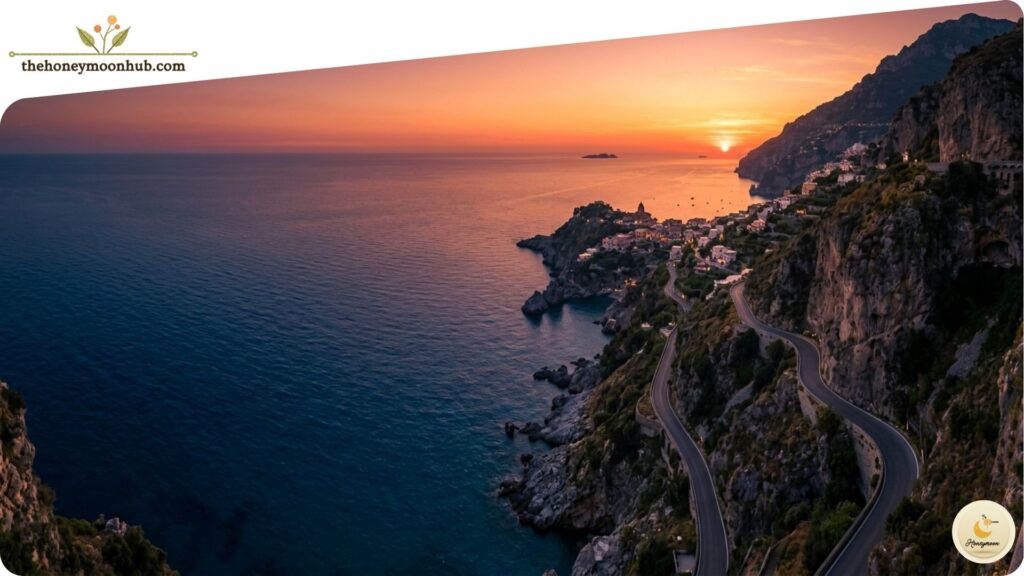
Positano: €400–800/night for anything tolerable. Amalfi town: €250–450. Praiano (my recommendation): €180–300 with better sunset views and a local bus that connects to everything. Ravello: €200–350 but requires a 20-minute uphill bus from Amalfi town.
The hack: Stay in Salerno for €100–150 and take the 25-minute ferry to Amalfi each morning. You lose the “waking up on the coast” magic but save €1,200 over four nights. Worth it if your priority is exploring rather than lounging.
Venice (2 nights)
Stay on the main island. The €50 savings in Mestre isn’t worth the commute across the bridge—trust me on this. Cannaregio offers the best honeymoon value: €150–250, quiet canals, 15-minute walk to Rialto.
Never book a “water view” room. You’ll pay €100 extra for a sliver of canal visible between buildings. Spend that money on a private water taxi instead.
Best Experiences Worth Every Euro
Private guided tour of the Colosseum underground (€120–150 per person). The standard ticket gets you the stands. The underground tour puts you where the elevators and animal cages operated. Book two months out—these sell before anything else.
Sunset dinner at Aperitivo in Milan’s Duomo Rooftop (€50–80 with drink). Not dinner. Do this instead of a formal meal. The terrace faces the Madonnina statue as the sun hits the marble. Corny? Yes. Worth it? Absolutely.
Cooking class in Bologna (€90–130 per person). Bologna beats Florence for food credentials. You’ll make fresh pasta in a 15th-century palazzo. Most classes include lunch with wine. Your spouse will remember this more than any museum.
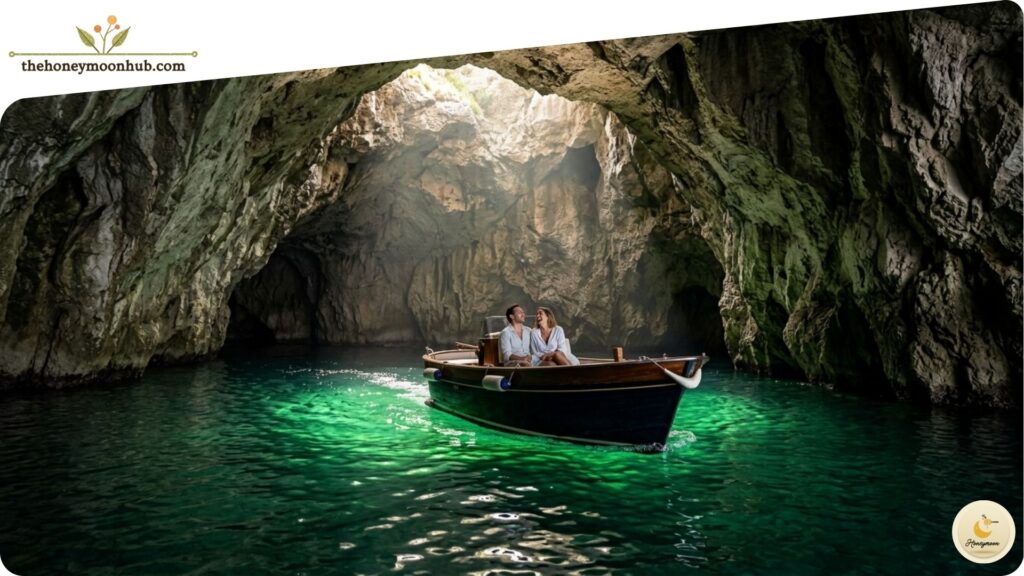
Private boat to Capri’s Green Grotto (€180–250 total for 2 hours). Shared tours cost €40 but pack twenty people onto a loud motorboat. Private is non-negotiable for honeymooners here. Your skipper takes you into the grotto when other boats aren’t jockeying for position.
Wine tasting in Chianti (€60–100 per person including transport from Florence). Skip the big-brand vineyards. Book a small producer through a local operator like Walkabout Florence. You’ll taste better wine and meet the family who grows it.
Insider Travel Tips
Pickup zones in Venice will ruin your arrival. The water taxi dock at the airport has no central booking desk. You queue for a shared boat that stops at every hotel along the Grand Canal. That 40-minute trip becomes 90 minutes. Book Alilaguna’s Orange Line online before you land—€15 per person, fixed route, predictable timing.
The “coperto” charge isn’t a scam. That €2–3 per person cover charge appears on every restaurant bill. It covers bread and table service. It’s legal. It’s standard. Stop arguing about it.
Train station luggage storage changes everything. Most medium-sized stations (Verona, Bologna, Salerno) offer left luggage for €5–8 per bag. Use this on travel days. Store your suitcases, explore a town for four hours, then continue to your next city. This turns transit from lost time into a bonus experience.
Sunday closures are real in small towns. Outside Rome, Florence, and Milan, assume grocery stores close by 1 PM Sunday. Pharmacies rotate weekend hours on a posted schedule. Stock up Saturday afternoon.
Public bathroom scarcity requires strategy. Every bar and cafe will let you use the toilet if you buy something—even a €1 espresso. Museum bathrooms are free but have lines. Train station toilets cost €1 and sometimes lack toilet paper. Carry coins and tissues always.
What Tourists Often Regret
Overpacking day trips. The couple who books Cinque Terre, Pisa, and Lucca in one 12-hour window returns miserable and exhausted. Pick one. Spend five hours there. Eat lunch slowly. You’re on honeymoon, not a scavenger hunt.
Renting a car without understanding ZTL zones. Every Italian city center has restricted traffic zones (ZTL) with cameras that photograph your license plate. One accidental entry costs €80–150. Florence’s ZTL is particularly punishing. Train travel removes this risk entirely.
Skipping the “dinner reservation” culture. Italian restaurants seating small parties operate on waves—7:30 PM, 8:30 PM, 9:30 PM. Walk-ins at 8:00 PM face 45-minute waits or rejection. Book through The Fork or call directly. This matters most in Bologna and Naples.
Buying leather on the street in Florence. The €40 “genuine leather” belt is pressed glue and scraps. Real Florentine leather starts at €150 for a basic wallet. Go to Scuola del Cuoio (the Leather School) near Santa Croce for authentic goods at fair prices.
Packing only summer clothes for October. I watched a shivering couple buy €200 sweaters in Positano because they trusted the forecast high of 22°C. Evenings drop 10–12 degrees. Pack layers even in high season.
Building Your Italy Honeymoon Budget: Real Numbers
Let me give you three concrete ten-day scenarios for 2026. Assume flights from New York JFK at €700–900 round trip (add €300–500 from West Coast).
Budget Honeymoon: €3,500–4,500 total for two
- Accommodation: €100–150/night (agriturismos, guesthouses, Airbnb)
- Food: €50–70/day total (breakfast included, lunch main meal, pizza or pasta for dinner)
- Transport: €250 total (regional trains, buses, no high-speed)
- Activities: €200 total (free museum days, walking tours, one cooking class)
- Sample route: Rome (4 nights) → Florence (3 nights) → Bologna (3 nights)
Mid-Range Honeymoon: €6,000–8,000 total for two
- Accommodation: €180–280/night (boutique three-star, some four-star)
- Food: €100–150/day total (aperitivo, one nice dinner, gelato daily)
- Transport: €400 total (high-speed trains, one private transfer)
- Activities: €500 total (Colosseum underground, Chianti tour, one cooking class)
- Sample route: Rome (3 nights) → Florence (3 nights) → Venice (2 nights) → Lake Como (2 nights)
Luxury Honeymoon: €10,000–15,000 total for two
- Accommodation: €400–700/night (five-star, view rooms, historic properties)
- Food: €200–300/day total (Michelin dinners, room service, wine pairings)
- Transport: €1,000 total (private water taxis, first-class trains, car service)
- Activities: €1,200 total (private guided tours, helicopter to Capri, exclusive tastings)
- Sample route: Rome (3 nights luxury) → Amalfi Coast (4 nights) → Florence (3 nights)
Suggested 10-Day Honeymoon Itinerary (Mid-Range)
a-Days 1–3: Rome
- Stay in Monti
- Day 1: Arrive, settle in, evening stroll to Trevi Fountain (midnight visit avoids crowds)
- Day 2: Colosseum underground tour (9 AM), Forum, lunch in Monti, Galleria Borghese afternoon
- Day 3: Vatican museums (book 8 AM entrance), Trastevere dinner
b-Days 4–6: Florence
- High-speed train (€45 each, 90 minutes)
- Day 4: Duomo climb, lunch at Mercato Centrale, sunset at Piazzale Michelangelo
- Day 5: Uffizi (book 10 AM), Ponte Vecchio, cooking class evening
- Day 6: Day trip to Siena (bus 50 minutes) or relax in Oltrarno
c-Days 7–9: Venice
- High-speed train (€60 each, 2 hours 15 minutes)
- Day 7: Arrive, water bus to Cannaregio, St. Mark’s Basilica (late afternoon avoids lines)
- Day 8: Doge’s Palace secret itineraries tour, Murano glass demo, cicchetti crawl
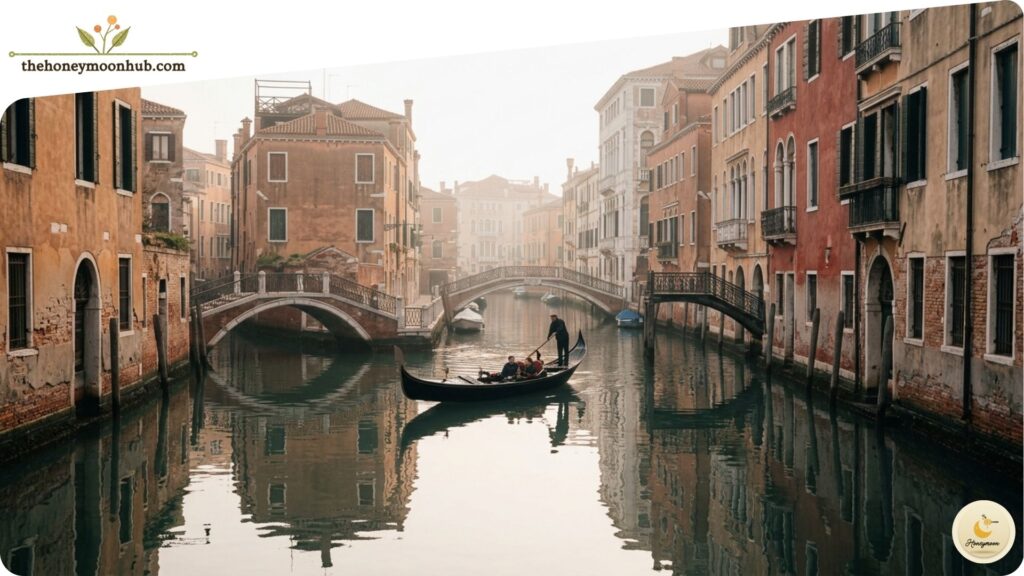
- Day 9: Rialto market morning, gondola at sunset (book ahead, €80–100 for 30 min)
d-Day 10: Depart from Venice (VCE)
FAQ
What is the average honeymoon in Italy cost for 10 days?
For a mid-range honeymoon with a mix of cities and comfort, budget €6,000–€8,000 total for two people including lodging, food, local transport, activities, and trains. Add €1,400–€1,800 for round-trip flights from the US East Coast. A luxury itinerary runs €10,000–€15,000. A budget trip focused on cheaper regions like Puglia or Sicily can hit €3,500–€4,500.
Is 2026 more expensive than 2025 for Italy?
Yes, by approximately 8–12% across accommodations and tours. The 2025 Jubilee year will drive infrastructure improvements but also raise baseline prices. Most hotels already published 2026 rates 5–8% above 2024. Book early 2026 dates by September 2025 to lock current pricing.
How can we reduce our italy honeymoon budget without ruining the experience?
Stay in Praiano instead of Positano, visit museums during free hours (first Sunday of each month), travel by regional train instead of high-speed, eat lunch as your main meal (menu fisso €15–20), book Airbnb with kitchen for breakfast, and fly into Milan or Rome rather than Venice or Naples. Skip the gondola in Venice—take the traghetto (€2) across the Grand Canal instead.
What’s the most underrated affordable honeymoon region in Italy?
Puglia (the heel of the boot). Lecce costs 40% less than Florence. The coastline matches Amalfi without the crowds. Trulli houses in Alberobello rent for €80–120/night. Fly into Bari (Ryanair from many European hubs) and eat the best seafood of your life for €25 per person including wine.
When should we book flights and hotels for a June 2026 honeymoon?
Book hotels 8–10 months out (August–September 2025), especially for Amalfi and Lake Como. Book flights 10–12 weeks before departure (March 2026). Do not wait for “last minute deals”—Italy’s honeymoon market has no off-season for desirable properties.
Is the Italy honeymoon cost lower if we skip Rome and Venice?
Significantly. Removing Rome and Venice saves €1,500–€2,000 on a 10-day trip. Replace them with Bologna (food capital, cheaper), Turin (elegant, under-touristed), or Verona (romantic, compact). You still get world-class culture without the premium pricing of the big three tourist hubs.