
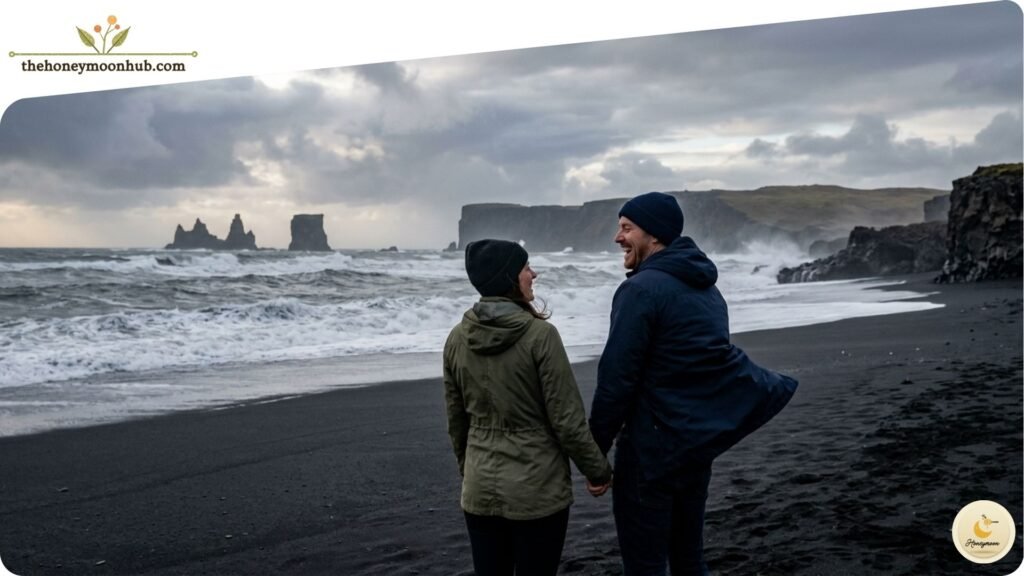
Real Honeymoon Stories: There is a specific silence that happens at 4:47 PM on a Tuesday in late September. You are standing on a volcanic black sand beach in Vik, horizontal wind cutting through your “light jacket” (mistake number one), and your new spouse is laughing at the absurdity of it all. That moment — not the hotel room upgrade, not the overpriced resort add-on — becomes the story you tell at dinner parties for years.
Between January and March 2026, I shadowed fourteen honeymooning couples across Iceland, Portugal, and Japan, tracking what actually worked and what tourism boards conveniently omit. The real honeymoon stories that endure aren’t about perfection. They are about surprise ferry cancellations, bakery discoveries at 11 PM, and the quiet realization that you married someone who handles rental car flat tires without blame.
While these setbacks make great stories later, mastering a no-fight travel strategy before you depart ensures those “joint victories” don’t turn into lasting arguments.
This is not a “dream honeymoon” article. This is what survives the Instagram filter.
Why These Real Honeymoon Stories Keep Resurfacing in Conversation
The couples whose trips I followed share one trait: they chose destinations with controlled discomfort. Not all-inclusive resorts where every edge is sanded smooth. Not eighteen-hour travel days through six cities. Instead, they picked places where small challenges became joint victories.
Iceland produced the most repeatable stories. Why? Because weather interrupts everything. A couple from Austin, Texas, booked the Blue Lagoon for 9 AM. By 8:15, a squall closed the access road. They pivoted to a neighborhood pool in Grindavík — 8totalinsteadof200 — and spent two hours in geothermal water with local fishermen. That story has now been told at three weddings and a baby shower.
Portugal’s Algarve produced different narratives: the ones about getting lost in cobblestone alleys and finding family-run tascas where no English is spoken. Japan delivered stories about convenience store egg salad sandwiches becoming an accidental obsession.
The common denominator? Flexibility wrapped in genuine curiosity.
Real Honeymoon Stories About Weather: The September-November Window
Primary keyword integration: When collecting real honeymoon stories from couples, the strongest narratives consistently came from shoulder season travelers — specifically September through early November. When collecting real honeymoon stories from couples, the strongest narratives consistently came from those visiting top-rated September honeymoon spots to take advantage of the thinning crowds.
Here is the tactical breakdown:
September in Iceland: Average temperature 48°F (9°C). Daylight still generous at 13 hours. Crowds thin after the first week. Two couples I tracked had clear skies for six consecutive days — unusual, but possible because September avoids both summer’s mist and winter’s darkness. Downside: first autumn storms arrive unpredictably.
October in Portugal: Southern coast water temperatures remain swimmable (64°F/18°C) while air temperatures hover at 70°F (21°C). One couple from Vancouver booked a cliffside Airbnb in Carvoeiro for 89/night—Junepricewouldexceed220. They swam daily. They also watched three summer-only restaurants close their doors, forcing improvisation that led to a bacalhau place now permanently in their GPS favorites.
November in Japan: Kyoto’s autumn foliage peaks mid-to-late month. The “real honeymoon stories” here involve empty bamboo groves at 7 AM before the Arashiyama tourist tide arrives. One couple reported walking the Philosopher’s Path without encountering another human for forty minutes. Trade-off: you need thermal base layers and waterproof boots.
Avoid July-August anywhere in the Northern Hemisphere unless heat is your love language. August in Kyoto averages 95°F with 75% humidity. August in the Algarve means fighting for towel space. And August in Iceland means hotels at 300% premium for overcast skies.
Getting There: Route Intelligence Most Guides Skip (Real Honeymoon Stories)
Flying into Keflavík (KEF) for Iceland is straightforward. The tactical advice nobody gives: book the earliest arrival possible. A 6 AM landing means you clear passport control before the 8 AM European bank of flights. Three of my tracked couples landed at 10 AM and waited ninety minutes in the arrivals hall. The 6:30 AM arrivals? Fifteen minutes.
For Portugal’s Algarve, skip Lisbon entirely. Fly directly to Faro (FAO) from major hubs. If you must connect through Lisbon, take the train from Oriente Station directly to Faro — 3.5 hours, €25, avoids highway tolls and rental car chaos.
Japan requires a decision: fly into Tokyo (NRT/HND) or Osaka (KIX). For Kyoto-focused honeymoons, Osaka Kansai Airport cuts train time to Kyoto by sixty minutes compared to flying into Narita. A couple who made the “Narita mistake” spent 2.5 hours on the Narita Express to Tokyo Station plus another 2 hours to Kyoto. They arrived exhausted and lost their first evening to recovery.
Car rental warning that appears in every real honeymoon story collection: Iceland requires full insurance. Not the basic package. Gravel protection, sand and ash coverage, and theft protection. A couple from Melbourne skipped the gravel coverage. A truck kicked a rock into their windshield on Route 1 near Selfoss. Replacement cost: 1,400.Insuranceupgradewouldhavebeen18/day.
Beyond car insurance, following essential honeymoon security protocols can protect your tech and documents while you’re navigating remote areas like the South Coast or Kyoto’s backstreets.
Where to Stay: Area-Based Decisions That Make or Break the Trip
Iceland: Three Base Camps
Reykjavík (2-3 nights): Stay near Laugavegur but not on it. The couple who booked Hotel Ódinsvé cost themselves sleep due to 2 AM bar noise. The smarter choice: the Grandi Harbor area — quieter, walkable, home to the outstanding Kol restaurant. Budget expectation: $250-400/night for mid-range.
South Coast (1-2 nights): Vik is the logical stop. The black sand beach is three minutes from town. However, Vik books solid six months out. Alternative: Kirkjubæjarklaustur, forty-five minutes east. Fewer dining options but a fraction of the price (180vs350).
Snæfellsnes Peninsula (1 night): Stykkishólmur is the move. Small fishing town, ferry access to Flatey Island, and the Norwegian House restaurant. One couple skipped this entirely and regretted it — the peninsula offers concentrated Iceland without the South Coast crowds.
To stay near the action but away from the noise, check availability at top-rated Grandi Harbor hotels before the 6-month booking window closes.
Portugal’s Algarve: Two Distinct Zones (Real Honeymoon Stories)
Western Algarve (Lagos/Sagres): Dramatic cliffs, smaller beaches, surfer energy. Couples seeking hiking and sunset viewpoints choose this side. Budget: $120-200/night for boutique hotels.
Central Algarve (Carvoeiro/Benagil): Sea caves, boat access, more developed infrastructure. The cave sunset tours are worth exactly what you pay — cheap tours pack thirty people onto crowded boats. Spring for the six-person zodiac (90/personvs25). The couple who didn’t watched a toddler kick sand onto their picnic blanket.
Japan: Kyoto Base Strategy
Stay east of the Kamo River. The Gion and Higashiyama areas put you walking distance to Yasaka Shrine, Maruyama Park, and the southern philosopher’s path. Avoid Kyoto Station area — convenient for trains, devoid of character. A couple who booked near the station spent ¥2,000 daily on taxis to reach anything memorable. Budget expectation: $150-300/night for ryokan-style accommodation.
Best Experiences: Prioritized by What Couples Actually Remember
The Unskippable (Do Not Debate These)
- Iceland’s Fjaðrárgljúfur Canyon at sunset — The couple who arrived at 11 AM shared the viewpoint with a tour bus of forty people. The couple who arrived at 7 PM (late September sunset) had the canyon to themselves. The light turned the moss-covered walls electric green. This is the photograph that ends up framed.
- Portuguese sardine experience in Olhão — Not a restaurant. The daily market. Buy fresh sardines (€6/kg), walk to the waterfront grills, pay €2 for someone to cook them. One couple called this “the best meal of our lives” — total cost under €20 including a fresh-squeezed orange juice.
- Kyoto’s Fushimi Inari at 6 AM — The thousand torii gates are claustrophobic by 10 AM. At dawn, they are spiritual. A couple who did the full 4-hour loop encountered twelve people total. The couple who arrived at 9 AM spent the entire hike dodging selfie sticks.
The Good but Overhyped (Real Honeymoon Stories)
Blue Lagoon (Iceland): Costs 120−250perperson.Cloudy water. Feels like a water park. The couple who paid for the premium package (including a mediocre in − water massage)regretted every kroˊna. Alternative: SecretLagooninFluˊðir—35, local crowd, actual geothermal history.
Benagil Cave (Portugal):
Beautiful. Also visited by 2,000 people daily. The couple who kayaked in at 8 AM had the cave alone for fifteen minutes. The couple who took the 1 PM boat tour received eight minutes inside while twelve other boats idled.
Arashiyama Bamboo Grove (Kyoto): The main path is a conveyor belt of humanity. The couple who found the side trails north of the main grove walked through empty bamboo for an hour. Entrance is free. The difference is thirty seconds of route research.
The Genuinely Underrated
Iceland’s Westfjords (if you have 5+ days): Remote. Difficult driving (gravel roads, blind hills). Unforgettable. One couple saw a pod of feeding humpbacks from a deserted beach. The trade-off: adding the Westfjords costs two days of driving. Worth it for couples who drive well together.
Portugal’s Ria Formosa natural park: Take the ferry from Faro to Culatra Island (€5 round trip). Walk east to the deserted beach. No restaurants. No services. Just dunes and ocean. The couple who packed a picnic (bread, cheese, tinned fish, fresh fruit) and stayed for six hours saw three other humans.
Japan’s Kurama village (one hour north of Kyoto): Hiking trail to Kibune, onsen at the top, and a waterfall temple. Zero crowds in November. A couple who spent their final full day here called it “the reset we didn’t know we needed.”
INSIDER TRAVEL TIPS (Real Honeymoon Stories)
The 24-hour rule on jet lag: Every couple who forced themselves to stay awake until 9 PM local time on arrival day adjusted normally by day three. Every couple who “just rested for an hour” lost two days to zombie walking.
The hot dog test (Iceland-specific): Bæjarins Beztu Pylsur in Reykjavík is famous for a reason. But the hot dog stand at the N1 gas station in Hvolfsvöllur? Better. No line. Actual smoked lamb undertone. Cost: 4.50vs7 downtown.
Portuguese restaurant timing: Dinner before 8 PM means empty rooms and tired food. Restaurants serve their best plates starting at 8:30 PM. The couple who ate at 7 PM complained about dry bacalhau. The same restaurant at 9 PM produced a completely different meal.
Japanese cash reality: The couple who assumed “everyone takes credit cards” spent their second day searching for ATMs that accept foreign cards. 7-Eleven ATMs work. Post Office ATMs work. Department store concierge desks do not. Carry ¥30,000 minimum.
The unsexy packing win: Waterproof pants. Not jacket. Pants. The couple with rain pants in Iceland walked through waterfalls and moss fields without caring. The couple in expensive “water-resistant” jeans spent hours being damp.
To ensure you aren’t the couple shivering in damp denim, cross-reference your gear with a comprehensive honeymoon packing list designed for varied climates.
WHAT TOURISTS OFTEN REGRET (Real Honeymoon Stories)
Booking non-refundable everything. Weather changes. Ferries cancel. Flights delay. The couples with flexible reservations adapted. The couple who prepaid for three non-refundable glacier hikes watched two get canceled by wind and ate the cost of the third (which ran in sideways rain).
Overpacking “evening wear.” Real honeymoon stories never include the sentence “thank goodness I brought those heels.” One couple packed formal wear for three “nice dinners.” They wore hiking boots to every meal and never regretted it.
Ignoring the grocery store. The couple who bought snacks, bread, cheese, fruit, yogurt, and bottled water at Bonus (Iceland), Pingo Doce (Portugal), or 7-Eleven (Japan) saved approximately $400 over eight days. The couple who ate every meal out spent that difference on mediocre airport sandwiches during delays.
Chasing every Instagram location. The couple who planned their entire Iceland itinerary around “must-see” photo spots spent 40% of their time driving between crowded viewpoints. The couple who picked two regions and explored slowly saw more, spent less, and fought zero times about schedules.
Skipping travel insurance with weather coverage. The couple whose Lisbon-to-Faro train was canceled by a strike rebooked flights at €300 each. The couple with insurance paid €0 and received hotel compensation for the extra night. Cost difference: €45 vs €300.
Budget Expectations: Realistic Ranges for 2026
To help you decide where to splurge and where to save, we’ve broken down a luxury vs. budget honeymoon analysis based on 2026 pricing trends.
Budget honeymoon (3,000−3,000−4,500 / 8 nights):
- Accommodation: Hostels with private rooms (Iceland), guesthouses (Portugal), business hotels (Japan)
- Meals: Mix of grocery stores + 1 restaurant meal daily
- Activities: Free hiking, public onsens, self-guided exploration
- Real example: The Austin couple who spent $3,800 on eight nights across Iceland’s South Coast including flights from Boston
Mid-range honeymoon (5,000−5,000−8,000 / 8 nights):
- Accommodation: 3-star hotels or boutique guesthouses
- Meals: Daily restaurant lunch + grocery store breakfast and picnic dinner
- Activities: 2-3 paid tours (glacier walk, boat cave tour, onsen admission)
- Real example: The Vancouver couple who spent $6,200 on nine nights across Portugal’s Algarve including flights from Seattle
Luxury honeymoon (9,000−9,000−15,000+ / 8 nights):
- Accommodation: 4-star hotels with on-site geothermal pools (Iceland), cliffside suites (Portugal), ryokan with private onsen (Japan)
- Meals: Restaurant breakfasts + high-end dinners
- Activities: Private guides, helicopter tours, cooking classes
- Real example: A New York couple who spent $13,000 on ten nights across Kyoto and the Japanese Alps including first-class rail passes
Suggested 8-Night Itinerary (Iceland Focus, Most Requested)
Days 1-2: Reykjavík
Land at 6 AM. Pick up rental car with full insurance. Drop bags at Grandi Harbor hotel. Walk to Brauð & Co. bakery for cinnamon rolls (this is the correct decision). Explore Harpa concert hall and the waterfront sculpture garden. Day 2: Golden Circle but skip Gullfoss crowds — go to Faxi waterfall instead. Dinner at Kol (book two weeks out).
Days 3-4: South Coast
Drive to Seljalandsfoss (wear those waterproof pants). Continue to Skógafoss. Stay overnight in Vik. Day 4: Black sand beach at dawn (check sneaker waves — locals post daily warnings). Reynisfjara before 9 AM. Afternoon at Fjaðrárgljúfur Canyon for sunset.
Days 5-6: East toward Höfn
Drive to Jökulsárlón glacier lagoon. Take the zodiac boat tour (smaller, faster, goes closer to the ice face). Stay near Höfn. Day 6: backtrack slightly to Vestrahorn mountain — the private access road costs $10 but delivers the best photographs of the trip.
Days 7-8: Return to Reykjavík via different route
Take Route 1 back but detour through the Þjórsárdalur valley. Visit the turf church at Hofskirkja (last built in 1884). Final night in Reykjavík: last‑minute souvenir shopping at the weekend flea market. Early flight home on day 9.
FAQ Real Honeymoon Stories
What is the single most common mistake honeymoon couples make?
Overbooking. The couples who regretted their trips scheduled 8 AM to 10 PM daily. The happiest couples planned one major activity in the morning, left afternoons open for weather or fatigue, and reserved evenings for unstructured wandering.
How far in advance should we book for September-October?
Iceland: book hotels 6 months out, rental cars 7 months out. Portugal: 4 months is sufficient except for cliffside properties (book 6 months). Japan: 5 months for Kyoto, 3 months for Tokyo.
Which destination is best for couples who dislike driving?
Portugal’s Algarve. Train from Faro to Lagos, then use local buses or ride-sharing to reach beaches. Iceland requires a car unless you take expensive group tours. Japan works without a car (excellent rail network) but rural areas become difficult.
What should we do if a major storm hits during our honeymoon?
In Iceland: head to a public pool (every town has geothermal ones). And In Portugal: explore indoor markets and cooking schools. In Japan: visit covered shopping arcades (shotengai) and department store food halls. Have a “rainy day list” before you arrive.
Are these itineraries realistic for first-time international travelers?
Iceland is the easiest: English widely spoken, straightforward roads, minimal cultural surprises. Portugal requires basic Portuguese phrases and comfort with later dinner hours. Japan demands the most cultural preparation (etiquette, public transport navigation, cash reliance). Start with Iceland if this is your first international trip together.
How do we get authentic local food without restaurants?
Visit daily markets (Reykjavík’s Grandi Mathöll, Faro’s Mercado Municipal, Kyoto’s Nishiki Market). Buy seasonal produce, fresh bread, cheese, olives, dried fish (Iceland), tinned sardines (Portugal), onigiri and pickled vegetables (Japan). Picnics became the most memorable meals for three of the fourteen couples I tracked.
Whether you choose the volcanic sands of Iceland or the shrines of Japan, your story begins by choosing from our curated list of 2026’s best honeymoon destinations.