

How to Plan Italy Honeymoon: You’ve seen the photos: pastel villages clinging to cliffs, gondolas gliding through sunset canals, empty piazzas at golden hour. What nobody warns you? August in Venice smells like low tide and sunscreen. Three weeks of museum fatigue. The quiet panic when your train from Florence to Cinque Terre books out seven days early.
To plan your Italy honeymoon well means deciding what to skip. A realistic budget for two people over 12–14 days falls between €4,500–€8,500 mid-range, or €9,000+ for luxury. That covers trains between cities, apartment-style hotels, one sit-down meal daily, museum tickets, and buffer for spontaneous Aperol spritzes. High-season June through September adds 30–40% to rooms.
Let me walk you through exactly how to build this trip without the regrets most couples only discover on day three.
If you want to avoid the common friction points couples face on multi-city trips, this stress-free couples travel planning framework will help you structure decisions before they turn into arguments.
Before committing to dates, it’s smart to check Italy honeymoon hotel prices across cities to understand seasonal spikes.
Why Couples Choose Italy for a Honeymoon
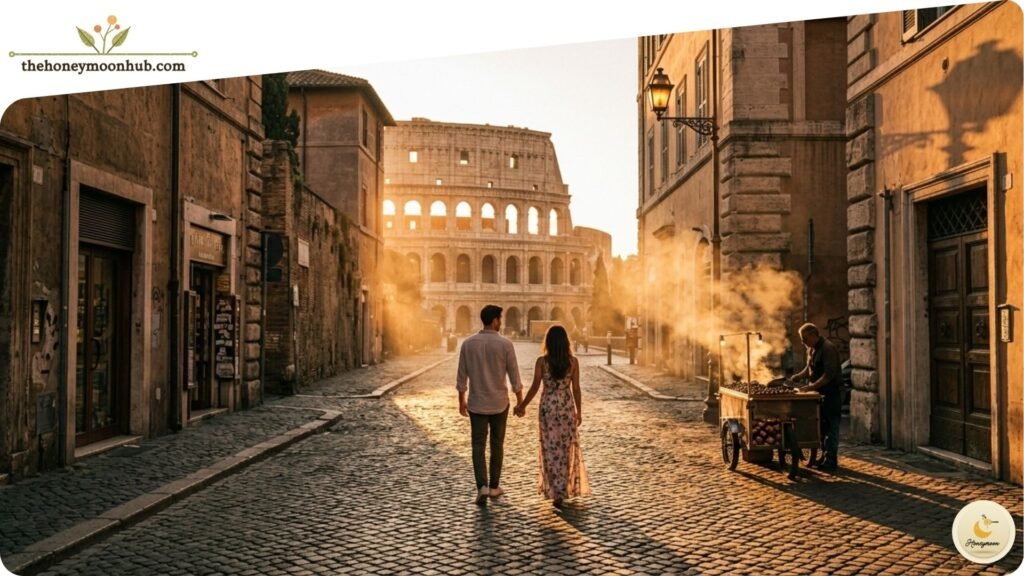
Italy sells a specific fantasy: slow mornings, wine at lunch without judgment, architecture that makes you feel small in the best way. But the real reason seasoned travelers recommend it? Operational ease. Trains connect every major city. English works widely. And the food economy means you can eat remarkably well for €15–20 per person if you avoid the piazza-front traps.
What surprised me most during my last route research was how disparate the regions feel. Venice is water and mystery. Tuscany is golden light and hill towns. The Amalfi Coast is vertical drama. You cannot do all three well in under two weeks. Accepting that early saves your marriage and your bank account.
Timing Your Italy Honeymoon: Weather, Crowds & Price Windows

Most blogs list months. Let me give you the real sensations.
April to May (Sweet Spot) (How to Plan Italy Honeymoon)
Wildflowers in Tuscany. The light lasts until 8 PM. Crowds exist but move. Lake Como ferries run full schedules without the July chaos. Downside: some coastal restaurants still closed until May 15. Morning chill requires a jacket.
This is also the ideal window for romantic Tuscany villa experiences when vineyards are active but not yet crowded.
September to October (Goldilocks Window)
Sea temperatures peak in September—swimmable Amalfi and Cinque Terre. Grape harvest means countryside tours are active. By mid-October, northern rain increases. What nobody mentions: October light in Rome is extraordinary for photos. Shadows stretch long. Air smells like roasted chestnuts by late month.
June to August (High Season Intensity) (How to Plan Italy Honeymoon)
You will queue. The Sistine Chapel becomes a shuffling tunnel of armpits. Air conditioning is not guaranteed—many historic hotels run weak units. The tradeoff? Festivals everywhere, evening piazzas buzz with energy, and the coast feels properly alive. Budget €100+ more per night.
November to February (Low Season Risk)
Flooding in Venice (acqua alta) is real. I watched water rise over St. Mark’s Square booties in 2023. But if you want empty museums and hotel rates at 50% off, this window works. Stick to Rome, Florence, Naples—coastal towns practically close.
How to Get There: Real Routes & Tactical Advice
Fly into one city, out of another. Open-jaw tickets cost roughly the same as round-trip now. Rome Fiumicino (FCO) and Milan Malpensa (MXP) have the most direct US connections. Venice (VCE) and Naples (NAP) work for region-specific starts.
The mistake couples make: landing in Rome at 8 AM, then immediately training to Florence. Don’t. Your first day is jet-lagged fog. Stay one night near Termini station. Shower. Eat pasta within walking distance. Sleep properly. Train to Florence at 10 AM the next morning.
Budget airline warning: Ryanair and EasyJet fly between Italian cities for €25–50, but their airports are often 1+ hour from city centers (Bergamo for Milan, Ciampino for Rome). Trains are simpler for the Rome-Florence-Venice triangle. High-speed Frecciarossa and Italo trains cost €30–80 if booked 3–4 weeks early.
Where to Stay on Your Italy Honeymoon: Area-Based Guidance
Skip the generic “hotel near attractions” advice. Here is where locals would tell their friends to book.
Rome — Trastevere or Monti (How to Plan Italy Honeymoon)
Trastevere buzzes at night. Cobblestone streets. Restaurants real Romans use. But it is noisy until 1 AM on weekends. Monti gives you vintage shops, quieter evenings, and 15-minute walking distance to the Colosseum. Avoid the area directly around Termini station—it feels gritty after dark.
Florence — Oltrarno (south of the river)
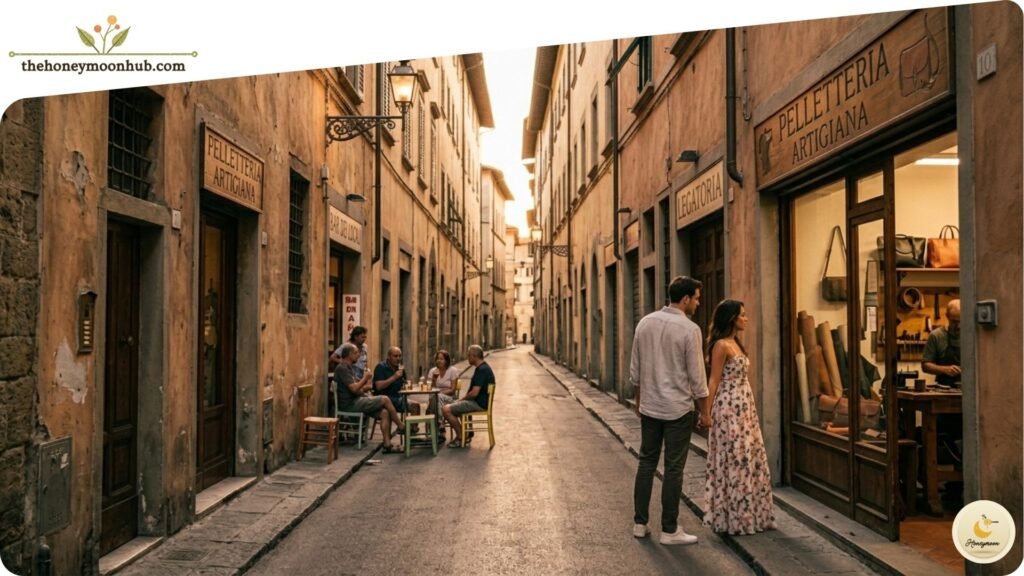
Tourists jam into the area between Duomo and Uffizi. Cross the Ponte Vecchio to Oltrarno and you find artisan workshops, better restaurants, and fewer selfie sticks. The walk to the Duomo takes 12 minutes max. Book at least four months ahead for May–October.
Venice — Cannaregio or Dorsoduro (How to Plan Italy Honeymoon)
San Marco is a mistake. Hourly flooding and cruise ship crowds. Cannaregio gives you Jewish Ghetto history, local wine bars, and a 20-minute walk to Rialto Bridge. Dorsoduro puts you near the Accademia Gallery and fewer tourist shops. Ask if your hotel has ground-floor entry—Venice floods and bridges are exhausting with luggage.
Amalfi Coast — stay inland or split your nights
Positano looks like a postcard and costs like a mortgage. €400+ per night minimum. The better play: stay in Sorrento (train access to Pompeii, ferries to Capri) for four nights, plus two splurge nights in Positano or Ravello. Ravello sits up in the hills—cooler evenings, no beach, but the views from Villa Cimbrone justify everything.
For a clearer picture of where to stay and what you’ll actually spend, review this full Amalfi Coast honeymoon cost breakdown before booking.
Mapping Your Italy Honeymoon Route: 3 Itineraries That Work
10 Days (Fast & Focused)
Rome (3 nights) → Florence (4 nights, includes day trip to Siena or San Gimignano) → Venice (3 nights)
This works. You do not add coast or lakes. The train between each is 1.5–2.5 hours.
14 Days (The Classic)
Rome (4 nights) → Florence (4 nights, with one day in Tuscan countryside) → Venice (3 nights) → Lake Como (3 nights)
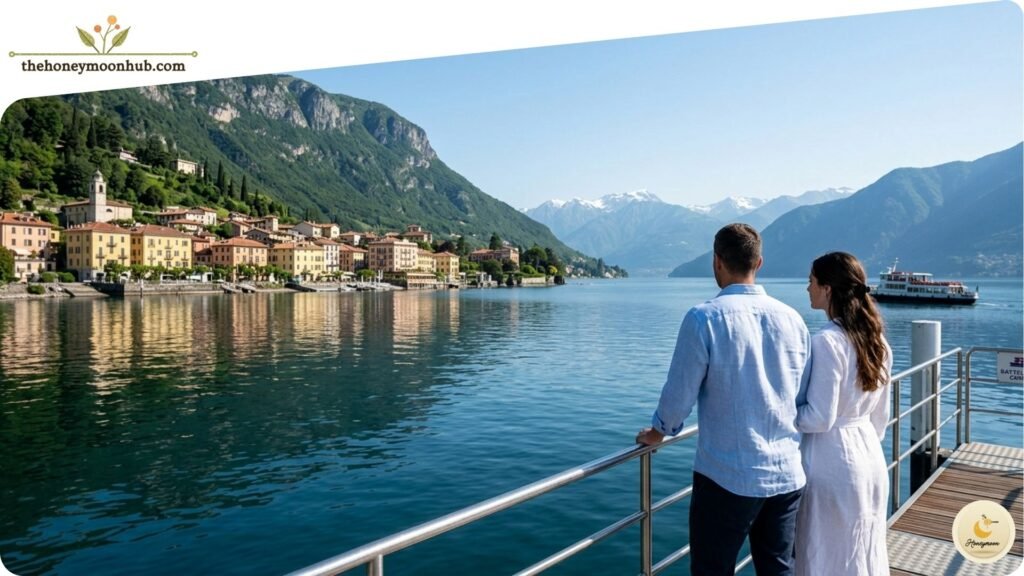
Como requires a train from Venice to Milan (2.5 hours) then a 40-minute local train to Varenna or Bellagio. Worth it for the ferry hopping and mountain backdrop.
14 Days (Coast Focus)
Rome (3 nights) → Naples/Sorrento (4 nights, Pompeii, Capri, Positano day trip) → Florence (4 nights) → Venice (3 nights)
You will move more. Pack light. The train from Sorrento to Florence requires a change in Naples. Ferries along the coast run hourly in season but sell out by 9 AM.
Do not attempt Rome → Florence → Cinque Terre → Amalfi → Venice. You will spend every other day checking in and out. Choose coast or lakes. Not both.
Budgeting Your Italy Honeymoon: Realistic Ranges for 2026
These are mid-range numbers for two people, 14 days, May or September.
Before locking your budget, it helps to compare luxury vs budget honeymoon costs so you understand exactly where upgrading delivers real value.
| Category | Budget (€) | Notes |
|---|---|---|
| Accommodation | 2,100–3,500 | 3-4 star, historic center locations |
| Trains | 250–400 | 4–5 high-speed trips + regionals |
| Food | 900–1,500 | Breakfast at hotel, lunch casual, one nice dinner daily |
| Attractions | 200–350 | Colosseum, Uffizi, St. Peter’s, gondola ride (€90) |
| Local transport | 100–150 | Metro, buses, water buses in Venice |
| Total (excl flights) | €3,550–5,900 |
Flights from US East Coast: €900–1,400 per person in high season. West Coast: €1,200–1,800.
The expense nobody budgets: city taxes (€3–7 per person per night, paid in cash at check-in). Also, cover charges (coperto) of €2–3 per person at restaurants—it is not a tip, it is bread and service, you cannot remove it.
Essential Italy Honeymoon Checklist
Before you confirm anything, run this list:
- Passports valid six months beyond return date
- Train tickets booked for legs over 2 hours (Frecciarossa prices climb)
- Major museums booked (Uffizi, Accademia, Colosseum, Borghese Gallery)
- Travel insurance covering flight delays (Italian strikes happen)
- Wired earbuds for train movies (Bluetooth dies, outlets are rare)
- Two payment methods plus €200 in cash for small shops
- Packing cubes (you will live out of suitables for 2–3 nights per city)
- Scarf for church entry (shoulders and knees must cover—they enforce)
You should also review essential honeymoon safety strategies before departure, especially with frequent transport strikes in Italy.
A complete honeymoon packing checklist ensures you avoid overpacking while still covering multi-city logistics.
This essential travel gear checklist will help you avoid last-minute airport purchases and unnecessary costs.
Best Experiences on an Italy Honeymoon (Prioritized)
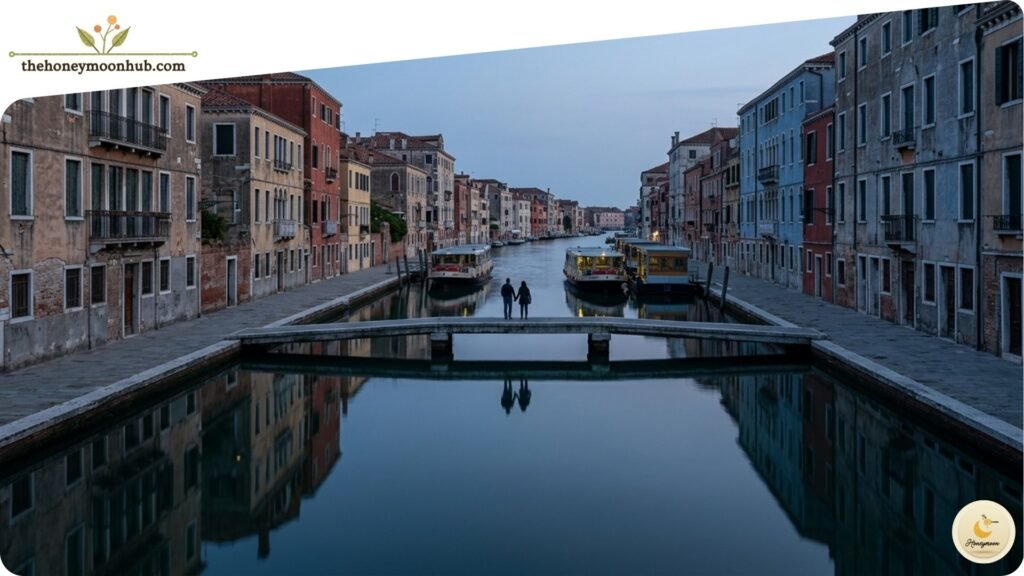
Not everything deserves your limited time. These deliver.
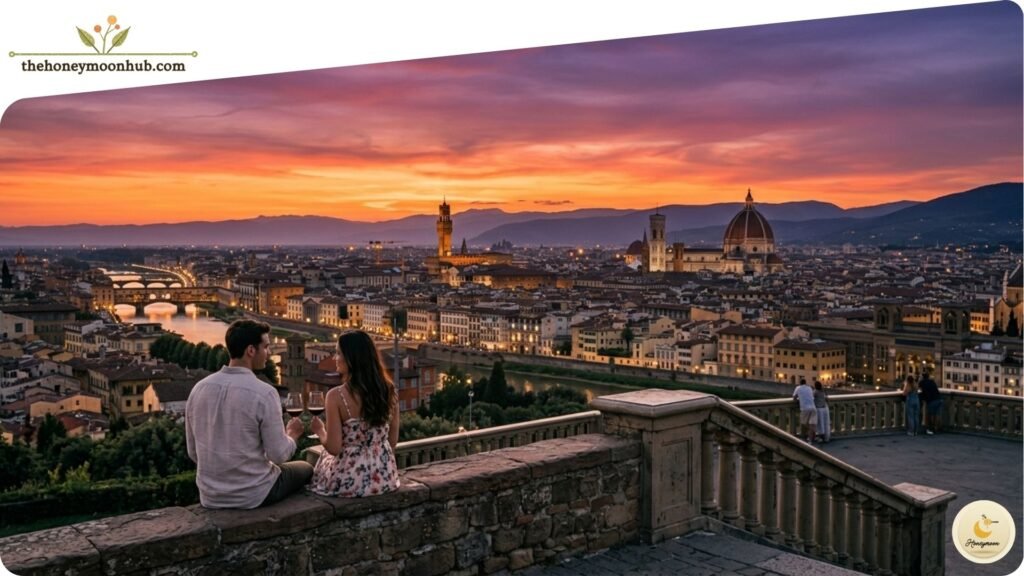
1. Sunset at Piazzale Michelangelo, Florence
Get there by 6:15 PM in summer. Bring wine from Enoteca Alessi (they open bottles for €2 corkage). Tourists cluster at the railing. Walk 50 meters left for the same view without elbows.
2. Gondola ride after 7 PM, Venice
Daytime gondolas bake in sun and traffic. Evening rides cost the same (€90 for 30 minutes) but the canals empty and lights reflect. Share with another couple to halve cost—drivers expect this.
3. Colosseum underground tour
Standard tickets show you the floor. Underground (il sotterraneo) takes you where animals and gladiators waited. Book 30 days exactly when released—they vanish within hours.
4. Cooking class in Bologna
Skip Rome for this. Bologna is Italy’s food capital. Hands-on pasta making from nonnas. Cost €100–150 per person. You eat what you make. The city itself is under-touristed and charming.
5. Ferry from Sorrento to Capri
Sit on the left side leaving Sorrento for views of the coast. Rent a private gozzo boat from Capri’s marina for €150–200 for two hours—cheaper than you think and you swim in the Faraglioni rocks.
Many couples extend this into luxury Capri boat experiences and stays for a more private and elevated coastal escape.
INSIDER TRAVEL TIPS (How to Plan Italy Honeymoon)
The train seat reservation trap. Regional trains (no seat numbers) are fine for short hops like Florence to Pisa. High-speed Frecciarossa requires seat reservations. If you miss your train, your ticket is garbage. Regional tickets must validate in the green stamp machine before boarding—fine is €50–100 per person and they check frequently.
Churches close midday. Between 12:30 PM and 3 PM, major churches shut for riposo. Plan museum mornings, church visits 10–11:30 AM, then lunch.
The coffee rule. Stand at the bar, pay €1.10 for espresso. Sit at a table, pay €4–5. Italians drink cappuccino only before 11 AM. Order a “caffè” for espresso, “caffè macchiato” for espresso with a drop of milk.
Water strategy. Buy 1.5L bottles from supermarkets (€0.50) not piazza kiosks (€3). Fill them at public fountains—Rome has nasoni (big noses) flowing with cold drinkable water everywhere.
Restaurant code. If a menu has photos or someone outside inviting you in, keep walking. The best meals come from places with handwritten menus in Italian only, away from monuments by two blocks minimum.
WHAT TOURISTS OFTEN REGRET
Overpacking for cobblestones. You will drag luggage over bridges, up curbs, through train stations. Two rolling suitcases per couple maximum. Bring a backpack for day trips. Hard-shell suitcases rattle loudly on Florence’s stone streets—soft-sided bags absorb noise.
Booking non-refundable rooms. Plans change. Trains strike. You get sick. Pay €20–40 more for free cancellation up to 48 hours. I have seen couples lose €800 because they chased a 10% discount.
Scheduling every minute. Leave afternoons open. The best moments are accidental: a street musician in a hidden piazza, a wine bar you duck into because rain started, a second gelato because why not. Honeymoors who over-plan fight. Those who leave margin enjoy.
Assuming credit cards everywhere. Many family trattorias, taxi drivers, and market stalls take cash only. ATMs (bancomat) work fine but your home bank may charge €5 per withdrawal. Withdraw €200 at a time.
Skipping train station bathrooms. Trains do not have toilets that reliably work. Use the station bathroom before boarding—usually €1 with an attendant. Keep coins handy.
FAQ How to Plan Italy Honeymoon
How much does an Italy honeymoon cost for 2 weeks?
For mid-range travel in May or September: €4,500–€7,500 total for two people including accommodations, trains, food, attractions, and local transport. Excludes flights. Luxury with private tours and 5-star hotels: €9,000–€15,000. Budget traveling hostels and street food: €3,000–€4,000 but not recommended for a honeymoon.
What is the best month to honeymoon in Italy?
May and September offer the best balance: comfortable temperatures (18–26°C / 65–80°F), fewer crowds than summer, lower prices than June–August, and full operational schedules for ferries, tours, and restaurants. October works well for southern Italy and Rome but northern lakes get rainy.
How many cities should you visit in Italy on a honeymoon?
Three cities over 12–14 days is the sweet spot. Four becomes transportation fatigue. Five is a business trip. Stick to one region (Tuscany + Rome + Florence) or a linear route (Rome → Florence → Venice). Add a coastal or lake town only if you extend to 16+ days.
Is it better to book Italy honeymoon flights 6 months early?
For May–October travel, yes. Book flights 5–7 months ahead for best routes and prices. For November–March, 3–4 months is fine. Open-jaw tickets (into Rome, out of Venice) price similarly to round-trip—use Google Flights’ multi-city tool.
If you’re still exploring options, these alternative honeymoon destinations worth comparing can help validate whether Italy is truly your best fit.
Planning your Italy honeymoon comes down to accepting limits: time, budget, and energy. Three cities well is better than five cities badly. Leave room for lazy afternoons and wrong turns—those become the stories you tell later. Book your trains, reserve your museums, then put the phone away and just walk.